Refine the rehabilitation plan
Agree measurable goals and a supervised progression.
Monthly second-opinion clinic · Grantham & Sleaford
0330 001 0048Achilles tendon / Patient guide
Explore persistent loss of push-off and how to assess progress after treatment without surgery.
A planned, non-urgent second opinion with Professor Paul Lee
Strength. Stability. Movement.
The Achilles links the calf muscles to the heel. A review connects tendon findings to your strength, walking and recovery goals.
Simplified illustration.
Start with your experience
After an Achilles rupture treated in a boot or cast, you may still struggle with stairs, walking pace or activities that previously felt effortless. Explain the specific task that feels weak and whether it is steadily improving, unchanged or deteriorating. Recovery should be discussed in terms of function as well as elapsed time.
Weakness alone does not prove that non-operative treatment was the wrong choice. Equally, a continuing limitation deserves a clear explanation and a plan for review. The consultation can help distinguish the questions about rehabilitation progress from questions about the tendon itself.
Connect the evidence
Which daily or sporting task remains difficult?
What has improved across supervised reviews?
Does the assessment point to rehabilitation needs or another concern?
A discussion framework, not a diagnostic test or a predicted recovery timeline.
Your clinical second opinion
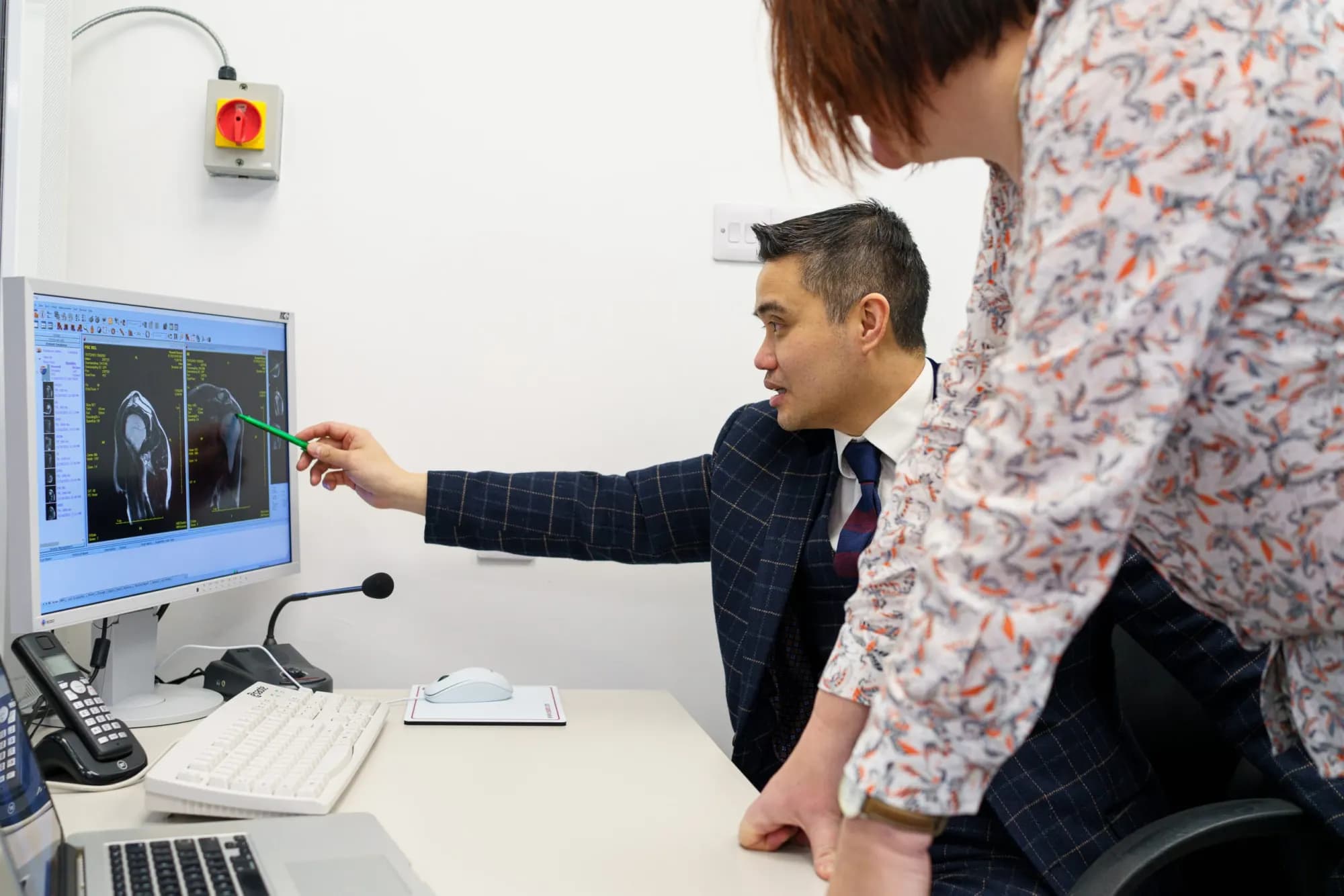
Bring your original assessment, imaging and rehabilitation records. The review can look at the protected-treatment phase and the later progression of activity, alongside your current examination. If measurements of strength or function have been taken by a physiotherapist, they can be useful for comparison.
Ask how progress will be measured safely and which findings would justify further imaging or a different treatment discussion. If you are considering an operation because recovery feels disappointing, the expected benefit needs to be connected to a specific finding. A second opinion should explain the reasoning, not simply promise that surgery will restore strength.
From explanation to a plan
These are directions the conversation may take. They are not a treatment recommendation for every person with these symptoms.
Agree measurable goals and a supervised progression.
Discuss whether another assessment would change advice.
Understand what evidence would support it.
Make the appointment yours
If the explanation uses an unfamiliar term, ask what it means for your own decision. Before leaving, check who is arranging any next step and how you will receive the results.

General patient information supporting the background to this guide. Your individual advice depends on assessment.
Second Opinion Clinic
£100 · 45 minutes · Monthly clinic sessions
Confirm the next clinic date, location and available slot when booking.