Clarify the current injury
Explain what has been established clinically and by imaging.
Monthly second-opinion clinic · Grantham & Sleaford
0330 001 0048Achilles tendon / Patient guide
Review a rupture diagnosed late and understand which decisions need making now.
A planned, non-urgent second opinion with Professor Paul Lee
Strength. Stability. Movement.
The Achilles links the calf muscles to the heel. A review connects tendon findings to your strength, walking and recovery goals.
Simplified illustration.
Start with your experience
You may have been told you had a sprain or calf strain, then later learned that the Achilles tendon was ruptured. Describe the original event in your own words: a pop, a feeling of being struck, loss of push-off or a change in walking. The dates of injury, diagnosis and treatment help establish the sequence.
A delayed presentation can raise different treatment questions from a newly recognised rupture. It is important not to assume that a plan designed for the first days after injury will automatically fit the situation now. If the injury is recent and has not been assessed, seek prompt care rather than waiting for this appointment.
Connect the evidence
What happened and what function changed immediately?
What protection or treatment was used before diagnosis?
What does assessment show and what decision is needed?
A discussion framework, not a diagnostic test or a predicted recovery timeline.
Your clinical second opinion
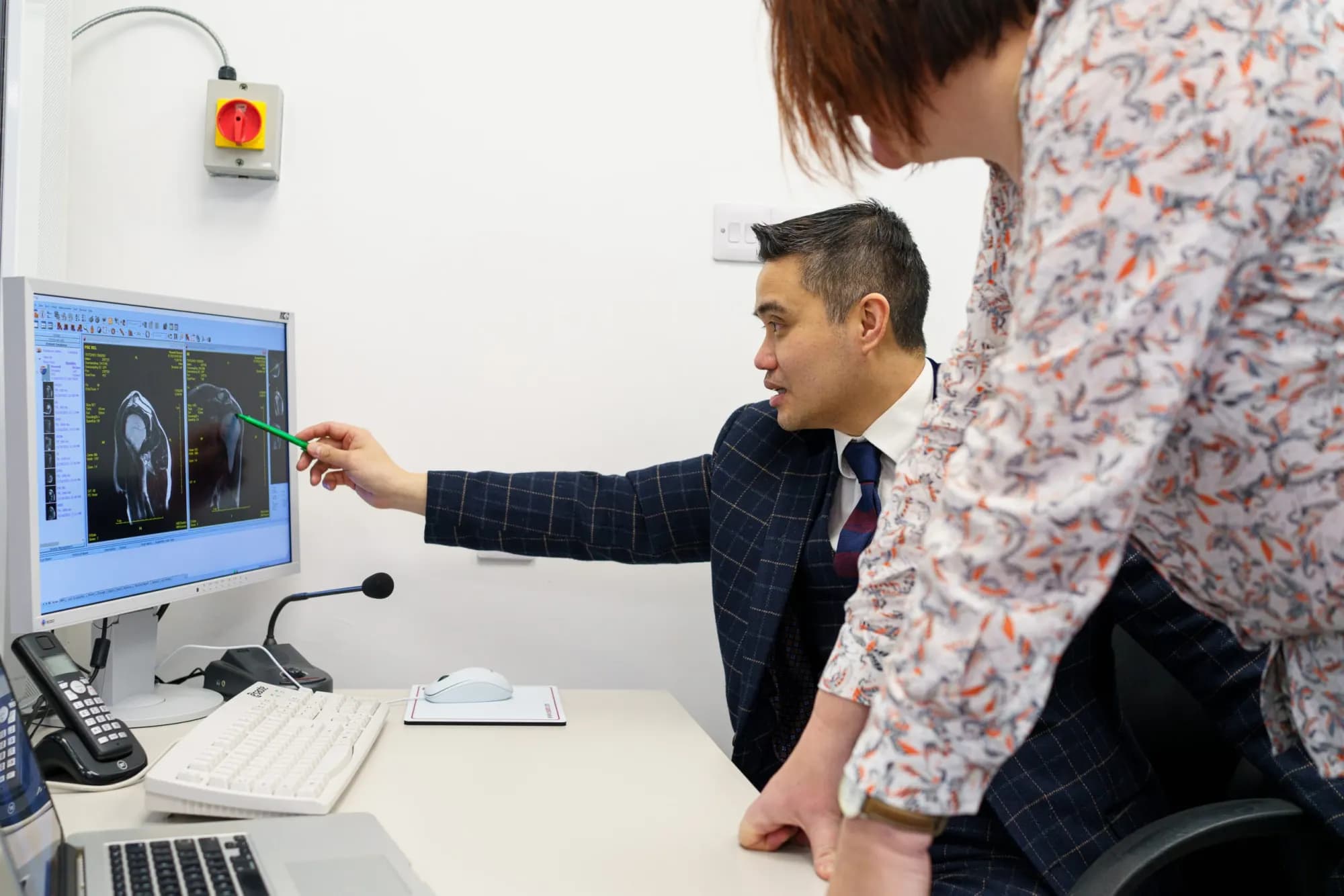
The review considers the examination, any ultrasound or other imaging and how the tendon has been managed so far. Bring information about boots, casts, wedges and rehabilitation, including when changes were made. These details help explain the care pathway without asking you to rely on memory alone.
Ask what the current findings establish about tendon continuity and function, what remains uncertain and whether further imaging would affect the advice. If surgery or continued non-operative care is discussed, the proposal should reflect your present situation and goals rather than simply the fact that diagnosis was delayed.
From explanation to a plan
These are directions the conversation may take. They are not a treatment recommendation for every person with these symptoms.
Explain what has been established clinically and by imaging.
Understand why operative or non-operative care is suggested now.
Ask how the next phase will be supervised.
Make the appointment yours
If the explanation uses an unfamiliar term, ask what it means for your own decision. Before leaving, check who is arranging any next step and how you will receive the results.

General patient information supporting the background to this guide. Your individual advice depends on assessment.
Second Opinion Clinic
£100 · 45 minutes · Monthly clinic sessions
Confirm the next clinic date, location and available slot when booking.