Monitor an explained finding
Agree what changes should trigger a further review.
Monthly second-opinion clinic · Grantham & Sleaford
0330 001 0048Knee & meniscus / Patient guide
Work out which symptoms need investigation and what they mean for the stability of your knee.
A planned, non-urgent second opinion with Professor Paul Lee

Start with your experience
An artificial knee may feel unfamiliar, but a sound and a functional problem are not the same thing. Tell the consultant whether clicking is painless or happens with pain, catching, swelling or a feeling that the knee may give way. Describe the situations in which it occurs rather than trying to reproduce it repeatedly.
Repeated swelling or loss of confidence on stairs can affect your independence even when you have been told that an X-ray looks satisfactory. Bring those practical concerns into the consultation. The aim is to understand the symptom pattern without assuming that every noise means the replacement is failing.
Connect the evidence
Is the click painless, painful or associated with catching?
When does it appear, and does it settle?
When does the knee buckle or feel unreliable?
A discussion framework, not a diagnostic test or a predicted recovery timeline.
Your clinical second opinion
Examination can assess how the knee moves and feels under appropriate clinical testing. The review also looks at the operation details, previous imaging and any episodes of falls or injury. A report of instability should be considered alongside pain, swelling and the demands you place on the knee.
Ask what further information is needed before calling the problem mechanical. Where infection is a concern, that question needs assessment too. The useful outcome is an explanation of what is known, what remains uncertain and which next step is likely to resolve the uncertainty.
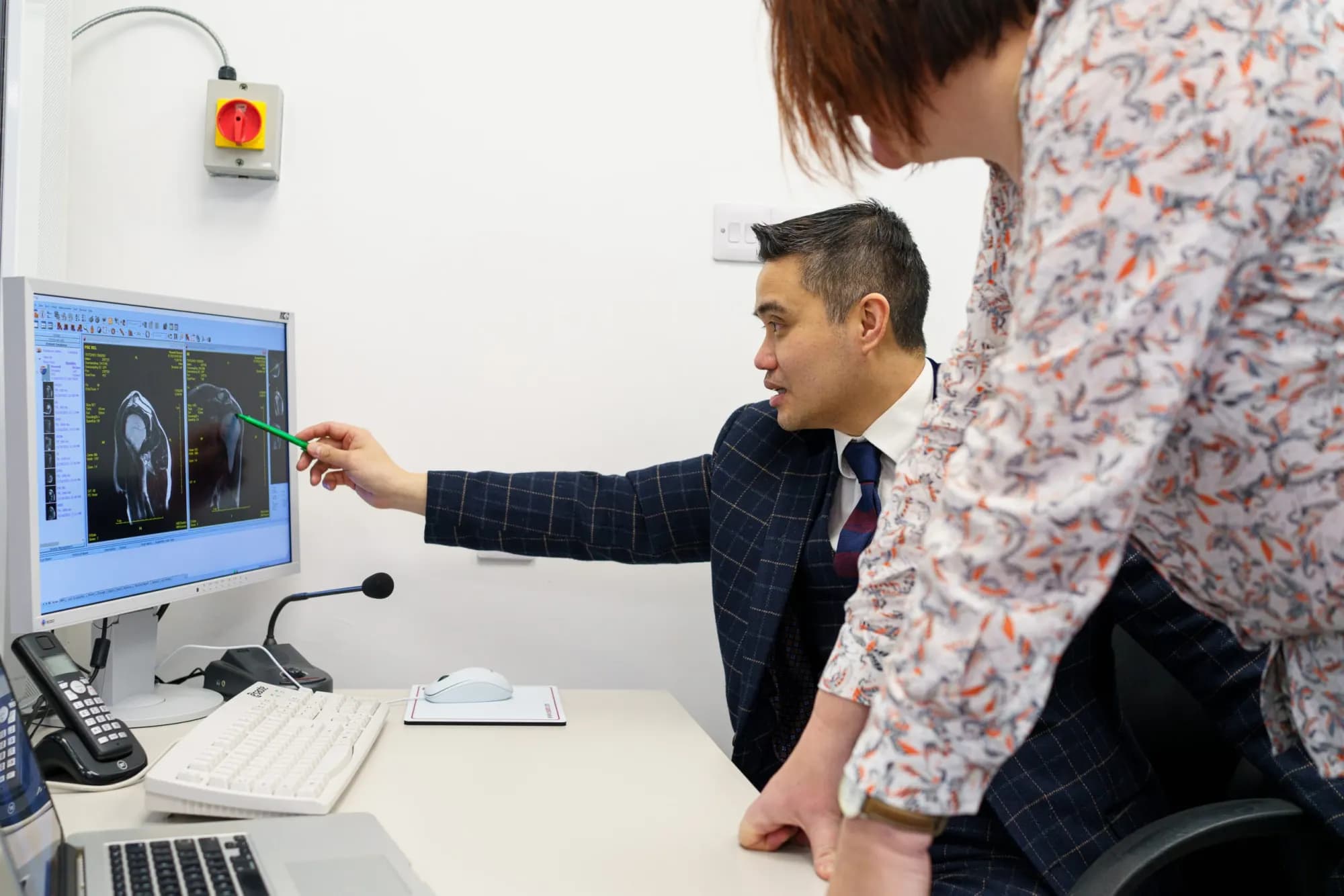
From explanation to a plan
These are directions the conversation may take. They are not a treatment recommendation for every person with these symptoms.
Agree what changes should trigger a further review.
Discuss whether these fit the identified problem.
Ask which component or stability problem revision would correct.
Make the appointment yours
If the explanation uses an unfamiliar term, ask what it means for your own decision. Before leaving, check who is arranging any next step and how you will receive the results.

General patient information supporting the background to this guide. Your individual advice depends on assessment.
Understand persistent symptoms after arthroscopy and what the original operation did—and did not—address.
Read guide →Explore what repair, partial removal and rehabilitation would mean for your particular tear.
Read guide →Review restricted movement or continuing pain with a clear picture of your operation and recovery.
Read guide →Second Opinion Clinic
£100 · 45 minutes · Monthly clinic sessions
Confirm the next clinic date, location and available slot when booking.