A targeted rehabilitation plan
Clarify the loading and activity advice with your treating team.
Monthly second-opinion clinic · Grantham & Sleaford
0330 001 0048Hip replacement / Patient guide
Review outer-hip pain or weakness and whether the tendons that support walking are involved.
A planned, non-urgent second opinion with Professor Paul Lee
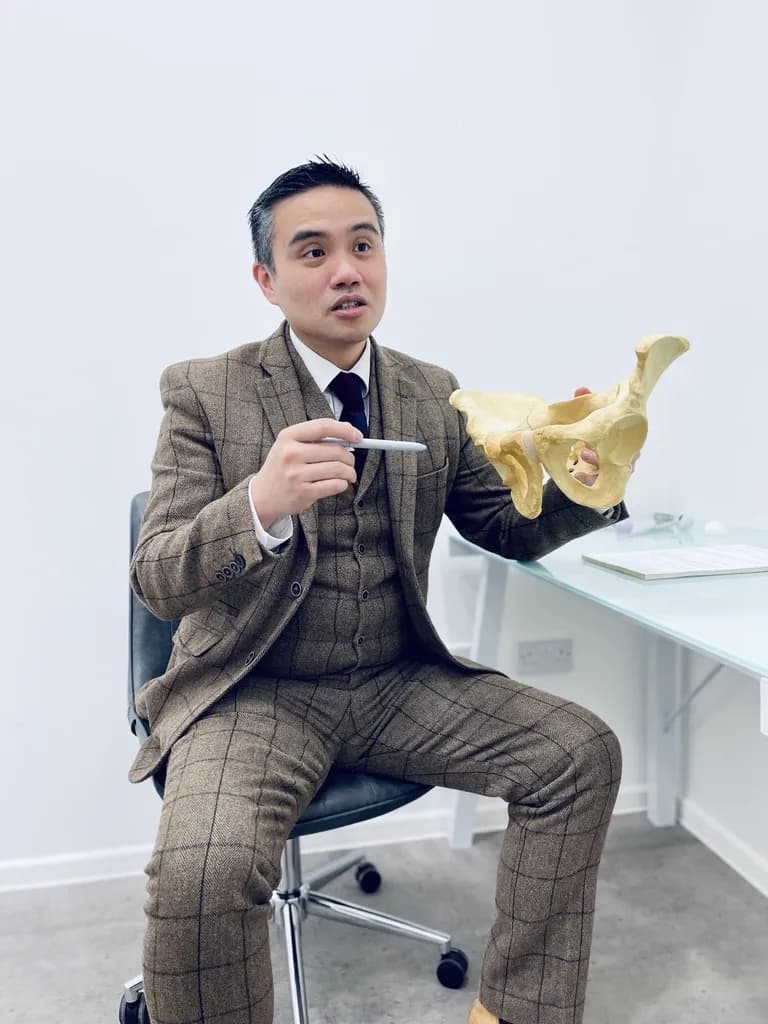
Start with your experience
The muscles and tendons around the outer hip help control the pelvis during walking. If you have been told that an abductor or gluteal tendon is injured, you may be trying to understand how that relates to your replacement, your limp or pain when lying on that side.
A tendon problem and a problem with the implant are different questions, and more than one finding can be present. The consultation should make the diagnosis and its level of certainty clear. Do not assume that a mention of “tendinopathy” means a full tear or that every tear requires an operation.
Connect the evidence
Is the main pain at the side of the hip or elsewhere?
What happens when you walk, climb stairs or get up?
What does imaging establish, and what remains uncertain?
A discussion framework, not a diagnostic test or a predicted recovery timeline.
Your clinical second opinion
Bring any ultrasound or MRI report and the images if available, alongside your hip-replacement records. The review can explore whether the reported tendon finding matches the location of pain, the examination and the walking difficulty you describe. Explain how symptoms changed with therapy or after an injury.
If repair or reconstruction has been discussed, ask what tissue is involved, what makes the proposal suitable and what restrictions would follow. If rehabilitation is advised, ask how it will be tailored to the actual diagnosis. The aim is a coherent plan rather than treating an isolated scan phrase.
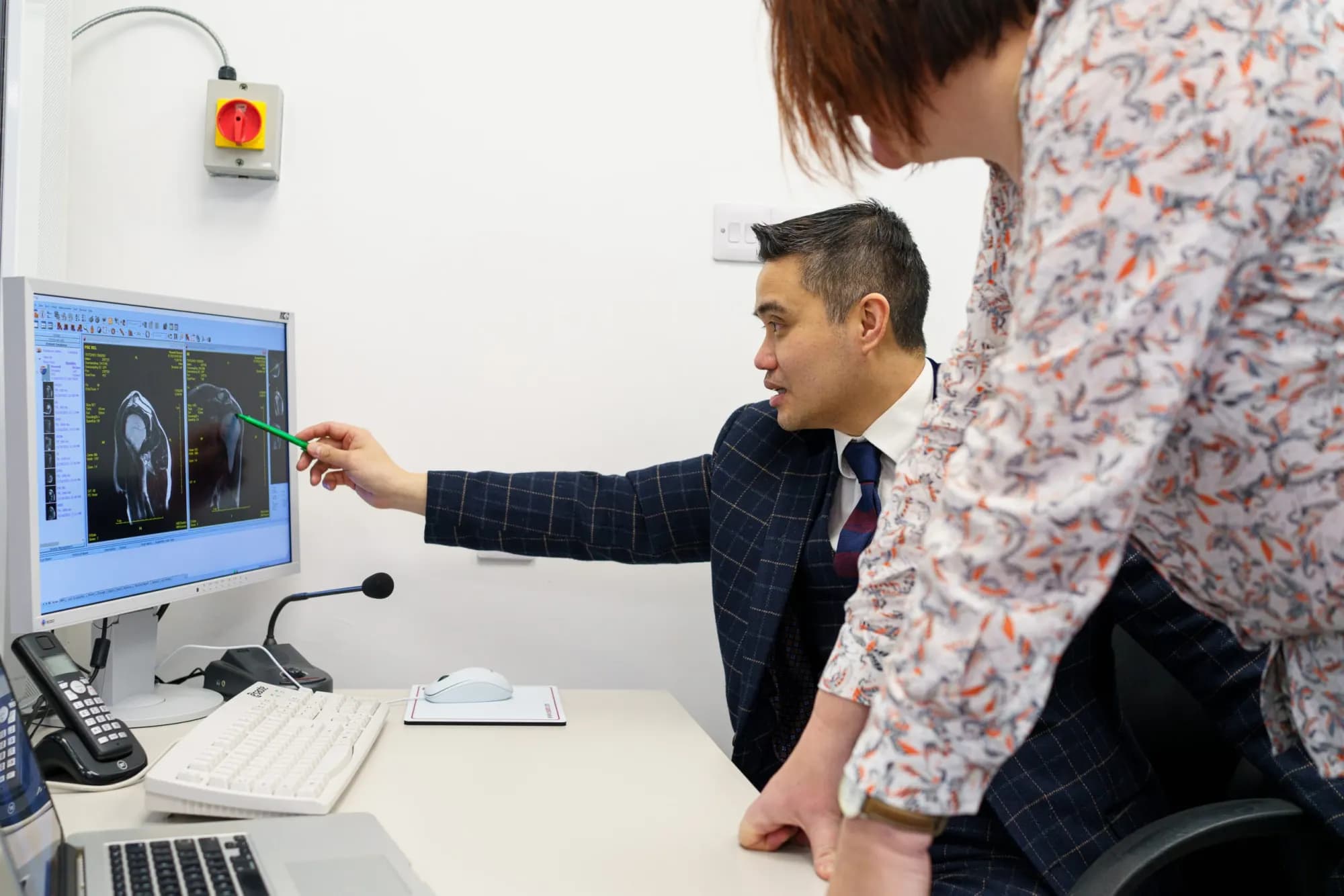
From explanation to a plan
These are directions the conversation may take. They are not a treatment recommendation for every person with these symptoms.
Clarify the loading and activity advice with your treating team.
Resolve uncertainty about the tendon, muscle or implant.
Understand suitability, limitations and protected recovery.
Make the appointment yours
If the explanation uses an unfamiliar term, ask what it means for your own decision. Before leaving, check who is arranging any next step and how you will receive the results.

General patient information supporting the background to this guide. Your individual advice depends on assessment.
Understand a persistent limp by looking at walking, strength, pain and the hip replacement together.
Read guide →Explore why your legs feel unequal and how that difference has been assessed.
Read guide →Understand the evidence behind a suspected implant problem and the questions that need resolving.
Read guide →Second Opinion Clinic
£100 · 45 minutes · Monthly clinic sessions
Confirm the next clinic date, location and available slot when booking.